
Keep Warm and Don’t Let Moose Lick your Car (by Robert McMillan)

Parks Canada has issued a strange plea: don’t let moose lick your car. Um, what? Moose need a large amount of sodium, and in winter they eat it from the roads which are sprinkled with salt to melt ice and prevent car accidents. That salt gets on vehicles, and moose sometimes lick it off of stopped cars. Parks Canada, responsible for the management and protection of Canada’s national parks, is worried about accidents caused by cars and moose stopping on highways.
Parks Canadaが妙なお願いをしています。ムースに車を舐められないように、と。(*ムースとはとても大きい鹿でアメリカヘラジカと呼ばれます。)なんででしょう? 実はムースの身体は多量のナトリウムを必要としており、冬場にカナダの道路が凍らないように撒かれている塩を食べに来るんです。道路の塩はもちろん車にも付着し、それを食べにムースがやって来るわけです。Parks Canadaはカナダの国立公園を保護するのが仕事で、塩を舐めるムースが車を止め、事故を引き起こすことを心配しています。
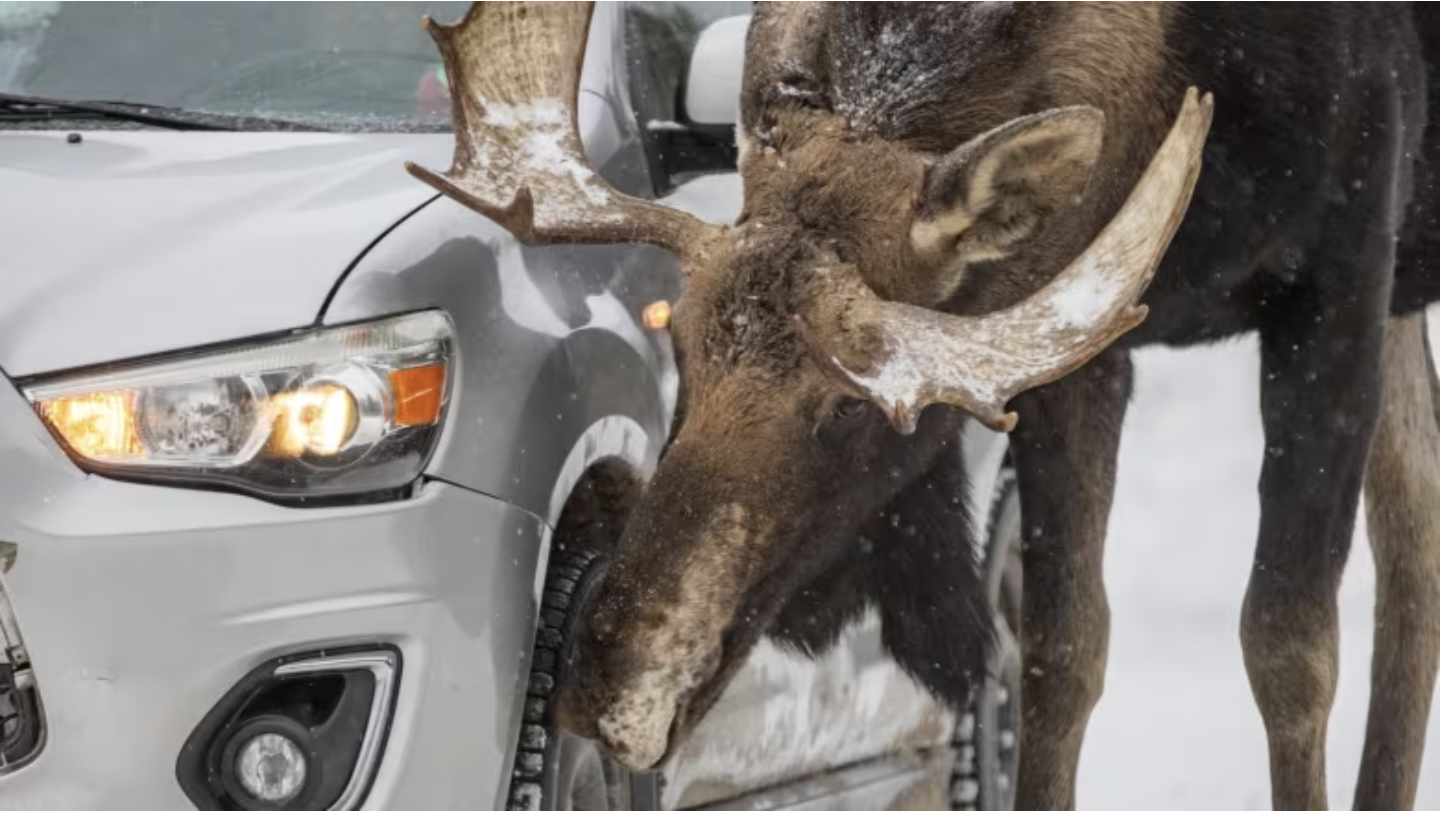
This is but one of the natural dangers facing Canadians. When you grow up here, you learn from adults around you how to avoid such dangers. International students, however, are not often informed of this common safety knowledge. So, in the next few columns, I have a crash course on how to avoid the three big natural dangers of Canada: wildlife, natural diseases, and cold. Today we’ll talk about the least sexy but most dangerous of them all, the cold.
これはカナダの自然が引き起こす様々な危険のひとつです。カナダで育つと、周りの大人から自然の中にある危険をどう避けるかを学びます。ところが、留学生にはそのようなカナダの一種常識でもある情報を得る機会がありません。
ですから、ここからシリーズで私が「集中コース」を提供していきますからね。カナダで起こりうる3大自然危険をどう避けるかについて:野生動物、自然の中で起こる病気、そして寒さがそれです。今日は3つの中でもそれほど「おぉ!」と身を乗り出すような話題ではないかもですが、「寒さ」について述べてみます。
Every child in Canada tries to slip outside only to hear their parents shout, “Put on a jacket!” When you manage to get out jacketless one cold day, you become frighteningly chilled and run back in. That firsthand experience informs many of us here about the dangerous reality of our winters.
カナダの子供ならもれなく親に怒られた経験があること。寒い日にこっそり外に出ていくと、親は「ジャケット着なさい!」と叫びます。たまたま寒い日にジャケットなしでこっそり外に出ることに成功したら、どうなると思いますか? 死ぬかと思うほど凍えてしまい家に走って帰ることになります。このようなカナダでの実体験からいかにこの国の冬が危険であるかを学んでいきます。
This past week, we had a low temperature of -42ºC with wind chills of -51ºC at our home Alberta. Weather forecasters warned that exposed skin would freeze in less than a minute. When skin freezes, it feels like a burn and may become black and eventually peel off. In the worst case, your fingers and toes can freeze badly enough to require amputation. The best advice on a very cold day is simple: stay inside. If you have to go out, cover all of your skin. Wear a warm jacket, toque, muffler, gloves, snow boots, and consider ski pants. Some people will also wear goggles to protect the eye area. I had the breath from my muffler rise up and freeze my upper and lower eyelashes together while walking to elementary school in Canada. I needed to take off a glove and melt the ice with my fingers to open my eyes completely.
1月のアルバータ州では-42度という寒さを経験しました。なんと体感温度は-51度ということでした。天気予報サイトでは、皮膚を露出するとすぐに凍ってしまうと警告していました。皮膚が凍るとまるで火傷をしたように感じ、黒く変色し皮がむけていきます。ひどいケースでは手や足の指が凍って腐り、切断が必要になることもあります。ものすごく寒い日は屋内にいること、これがベストのアドバイスです。もし外出しないといけないなら、皮膚は全部覆うこと。暖かいジャケットを着て、トゥークをかぶり、マフラーと手袋をし、厚いブーツを履いて、そうそうスキーパンツがお勧めです。目の周りの皮膚を守るためにゴーグルをする人もいるくらいです。 歩いて小学校に行く途中、自分の息がマフラーにかかり、それが上に上がって着て目の上と下両方のまつげがくっついて凍ったこともあります。慌てて手袋をぬいで、自分の手でまつげを暖めて氷を溶かしました。そうでないと目が開けられなかったです。
The parts of your body that protrude – toes, fingers and noses – are particularly vulnerable. Keep your nose in your muffler. Wiggle your fingers and toes to make sure you can still feel them. Seriously. If they feel very cold, get back inside. If you can’t feel them, then you are in trouble.
少し飛び出している身体の部分、足の指、手の指、鼻とか、には特に注意。鼻はマフラーで覆うこと。感覚がまだ残っていることを確かめるために、指は常にゴソゴソ動かしていること。マジです。もしものすごく寒く感じ始めたらすぐに屋内に入ること。もし、寒ささえ感じなくなったら、非常に危ないです。
More dangerous are the minus temperatures that don’t feel so bad; -10ºC, for instance. When you experience extreme cold, -10ºC feels strangely warm. In “warmer” cold temperatures, people sometimes jump from their centrally-heated houses to their pre-warmed vehicles and drive to their centrally-heated schools or offices without jackets or hats. Then if they have car troubles and need to walk for help, they can freeze.
それほど寒くは感じないマイナス気温が、実はもっと危険です。例えばマイナス10度とか。極寒を経験すると、-10度は奇妙に暖かく感じてしまいます。その「暖かく感じる」気温の中、人々は時にはセントラルヒーティングの暖かい家から、前もって暖めておいた車に走って行き、そして同じくセントラルヒーティングの効いた学校やオフィスに行きます、ジャケットも帽子もなしで。そして、もし車が故障し、歩いて助けを呼ばないといけないことになると、凍死することも稀ではありません。
For international students who own cars, bring along clothing warm enough so that you could walk outside if you have to, and keep a safety kit in your car. A good safety kit (by the government of Canada) includes food that won’t spoil, a blanket, a first aid kit and importantly, a candle with matches. If a sudden snow storm pops up and strands you on a snowy road, a lit candle will keep your car warm enough to avoid freezing.
車を持っている留学生は、必ず暖かい洋服を用意しておくことです。そうすればもし必要な場合にも外を歩くことが出来ますから。もしものための道具を用意しておくのもお勧め。カナダ政府は’a good safety kit’ として次のものを勧めています。こぼれない食べ物、毛布、救急箱、そしてとても重要なものであるマッチです。もし急に吹雪になり雪でいっぱいの道に立ち往生してしまったら、キャンドルをつけて下さい。それが車を暖めてくれ、凍死するのを防ぐことが出来ます。
In short, survival in a cold place requires preparation. You would probably not go to the beach all day in Japan in summer without drinking water, a hat or parasol and sunscreen. Here in Canada, we don’t go out without warm clothing and a safety kit in our cars.
要するに、寒い国で生存するには準備が必要だということです。例えば、日本の暑い夏に水、帽子やパラソル、日焼け止めも持たずに海辺には行かないのと同じです。ここカナダでは、暖かい洋服とa safety kitを持たずに車で外出することはありません。
Need help?
Contact me.